
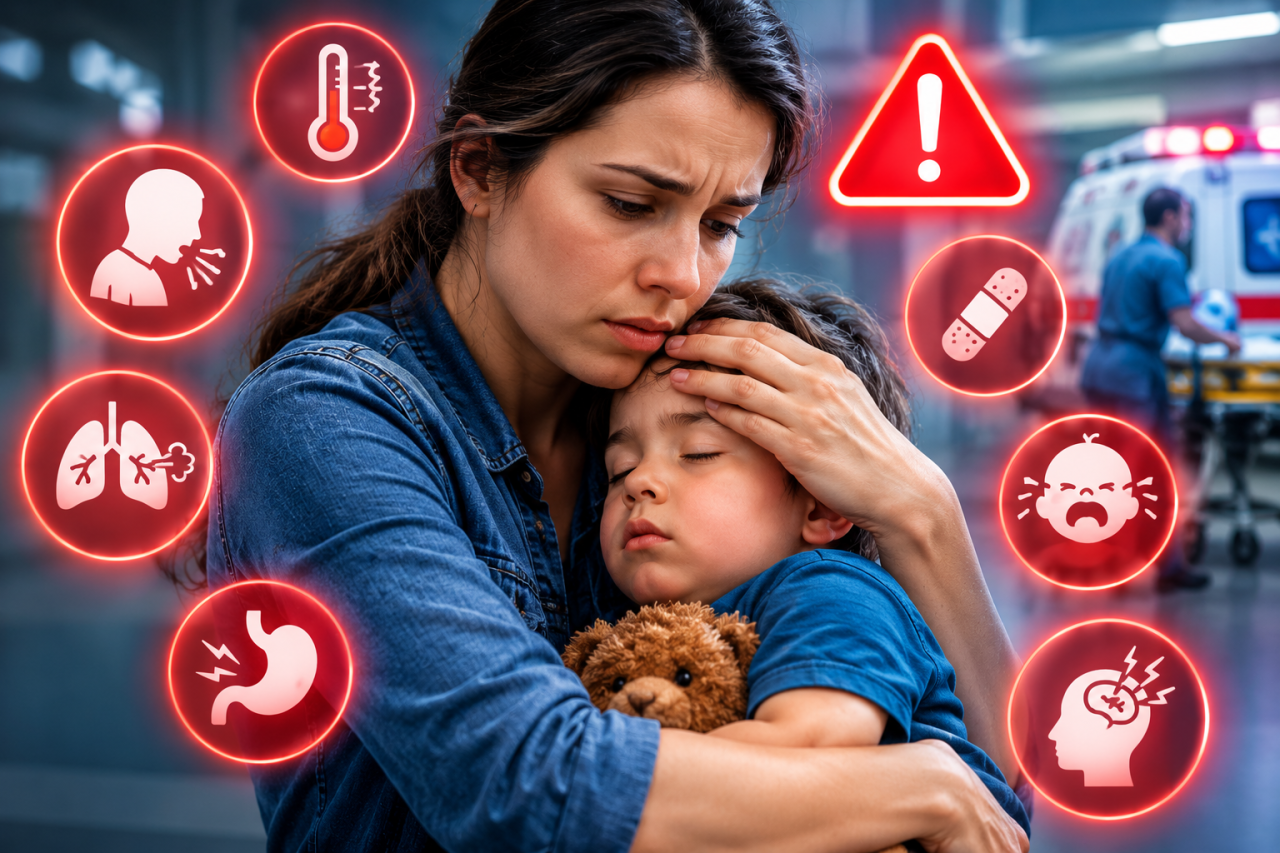
Being a parent involves making important decisions every day, especially when it comes to your children's health. One of the most frequent questions among mothers, fathers, and caregivers is knowing when an illness or symptom can be managed at home, when it requires a pediatric consultation, and when it's necessary to go to the emergency room immediately.
Children, especially younger ones, cannot always clearly express how they feel or describe their symptoms. Therefore, it is essential that adults learn to recognize warning signs that could indicate a medical situation requiring immediate attention.
At Clínica Hospital San Fernando, we understand the concern families feel when a child presents unexpected symptoms. That's why we offer medical care, diagnostic services, a clinical laboratory, and a 24-hour Emergency Room.,
prepared to provide timely care when it is needed most.
What is considered a pediatric emergency?
A pediatric emergency is any situation that represents a potential risk to the child's health or that requires rapid medical evaluation to avoid complications.
Not all childhood illnesses require immediate hospitalization. However, there are symptoms that should never be ignored and warrant urgent evaluation. The key is to identify when a child's body is showing signs that it needs medical attention.
Immediate medical attention.
Difficulty breathing: one of the most important signs
Respiratory problems are one of the main reasons for visits to pediatric emergency departments.
Immediate medical attention should be sought if the child presents with:
• Rapid or labored breathing.
• Rib retraction when breathing.
• Intense whistling sounds when breathing.
• Bluish discoloration of lips or nails.
• Inability to speak or cry normally due to lack of air.
These symptoms may be associated with various respiratory conditions that require immediate medical evaluation.
At Clínica Hospital San Fernando, the emergency department has trained staff and diagnostic support to respond quickly to these types of situations.
High fever: When should it be a cause for concern?
Fever is one of the most common symptoms in childhood and, in many cases, is part of the body's natural response to infections. However, there are situations that require urgent medical attention.
It is recommended to seek immediate evaluation when:
· The fever is very high.
· It occurs in young babies.
· It is accompanied by respiratory difficulty.
The child is having seizures.
· There is excessive sleepiness.
· There are signs of dehydration.
The child looks extremely depressed.
Medical evaluation allows the cause to be determined and the most appropriate treatment to be established.
Seizures: act quickly
Witnessing a seizure can be an alarming experience for any family. Seizures can be related to fever, neurological disorders, or other medical conditions.
In the event of a seizure, the following is recommended:
· Stay calm.
· Place the child in a safe position.
• Avoid putting objects in your mouth.
• Seek immediate medical attention.
A specialized evaluation is essential to identify the cause and define the steps to follow.
Dehydration: a risk that can progress rapidly
Children can become dehydrated more quickly than adults, especially when they have:
• Frequent vomiting.
• Severe diarrhea.
• Prolonged fever.
• Low fluid intake.
Some warning signs include:
• Dry mouth.
• Absence of tears when crying.
• Decreased amount of urine.
· Sunken eyes.
• Excessive sleepiness.
• Unusual irritability.
Early intervention helps prevent complications and restore the body's fluid balance.
Head injuries: when to go to the emergency room
Falls are a normal part of growing up and exploring children. However, some injuries require immediate medical evaluation.
It is recommended to go to the emergency room if, after a blow to the head, the child presents with:
• Loss of consciousness.
• Repeated vomiting.
• Excessive sleepiness.
· Seizures.
• Changes in behavior.
• Difficulty walking or speaking.
• Persistent, intense pain.
The medical evaluation may include diagnostic studies to rule out internal injuries.
Accidents and injuries
Children are naturally curious and active, which increases the risk of accidents. Some situations that require immediate attention include:
· Deep cuts.
• Major burns.
· Suspected fractures.
• Eye injuries.
· Traffic accidents.
· Severe blows.
In these cases, acting quickly can make a significant difference in recovery.
Severe allergic reactions
Some allergies can develop rapidly and become a medical emergency.
Immediate attention should be sought if the child presents with:
• Swelling of lips or tongue.
• Difficulty breathing.
• Generalized urticaria.
• Dizziness.
· Loss of consciousness.
Prompt attention is essential to avoid complications.
Severe abdominal pain
Although many abdominal pains in children are benign, some may indicate conditions that require medical intervention.
Urgent medical evaluation should be sought when the pain:
· It is intense and persistent.
· It is accompanied by repeated vomiting.
· It causes difficulty walking.
· It is located in a specific area.
· It is associated with high fever.
Medical evaluation allows the cause to be identified and timely action to be taken.
The importance of not self-medicating children
One of the most common mistakes is administering medications without medical guidance.
Self-medication can:
• Hiding important symptoms.
· Delaying diagnoses.
· Generate adverse effects.
· Complicate subsequent treatments.
If you experience persistent or worrying symptoms, it is always advisable to consult a healthcare professional.
Emergency room or pediatric consultation?
Not all childhood illnesses require emergency care. Many situations can be evaluated through scheduled appointments or primary care, including:
• Common colds.
• Growth controls.
• Monitoring of chronic diseases.
• Preventive assessments.
• Routine consultations.
However, when there are warning signs, going to the emergency room is the best decision.
Rapid diagnosis for timely care
One of the most important aspects in pediatrics is obtaining accurate information about the child's health status.
Therefore, Clínica Hospital San Fernando has diagnostic services that support medical evaluation.
Clinical laboratory
Laboratory analyses allow us to identify:
· Infections.
· Metabolic alterations.
• Hematological problems.
· Dehydration.
• Other medical conditions.
The results help guide diagnosis and treatment.
Imaging studies
Depending on the clinical situation, the doctor may request:
X-rays: Useful for evaluating fractures and some respiratory diseases.
Ultrasound: They allow visualization of internal organs without using radiation.
CT scans: Recommended in specific situations to obtain detailed images.
These studies contribute to a more complete and accurate assessment.
A hospital prepared to care for the whole family
When a child requires urgent medical attention, families need more than technology. They need trust, expertise, and a rapid response.
At Clínica Hospital San Fernando we have:
24/7 Emergency Room: Prepared to handle medical situations that require immediate evaluation.
Clinical laboratory: Diagnostic support for fast and efficient care.
Diagnostic imaging: Essential tools for the assessment of multiple pediatric conditions.
Medical specialists: Professionals trained to provide comprehensive care.
Modern hospital infrastructure: Focused on the safety and well-being of patients.
Listening to your body's signals can make all the difference.
Children rely on adults to recognize when something is wrong. That's why learning to identify warning signs and seeking medical attention promptly is one of the most important ways to protect their health.
Although many childhood illnesses are mild and resolve without complications, some require immediate intervention to avoid major consequences.
In San Fernando Hospital Clinic, We are committed to the well-being of Panamanian families, offering comprehensive medical care, specialized diagnostic services, and a team prepared to respond when it matters most.
Because when it comes to a child's health, acting in time can make all the difference.
